
Westchester County Deed Records and What They Show
Westchester Records Online indexes each recorded instrument with its date, parties, legal description, and filed-map reference. Check all five before concluding anything about a Westchester parcel.
| Deed Type | What It Does | Common Use |
|---|---|---|
| Warranty deed | Use Westchester Records Online to inspect the indexed instrument, recording date, parties, legal description, and filed-map reference before drawing a conclusion. | Use Westchester Records Online to inspect the indexed instrument, recording date, parties, legal description, and filed-map reference before drawing a conclusion. |
| Quitclaim deed | Use Westchester Records Online to inspect the indexed instrument, recording date, parties, legal description, and filed-map reference before drawing a conclusion. | Use Westchester Records Online to inspect the indexed instrument, recording date, parties, legal description, and filed-map reference before drawing a conclusion. |
| Grant / special warranty | Use Westchester Records Online to inspect the indexed instrument, recording date, parties, legal description, and filed-map reference before drawing a conclusion. | Use Westchester Records Online to inspect the indexed instrument, recording date, parties, legal description, and filed-map reference before drawing a conclusion. |
| Trustee / executor deed | Use Westchester Records Online to inspect the indexed instrument, recording date, parties, legal description, and filed-map reference before drawing a conclusion. | Use Westchester Records Online to inspect the indexed instrument, recording date, parties, legal description, and filed-map reference before drawing a conclusion. |
| Tax deed | Use Westchester Records Online to inspect the indexed instrument, recording date, parties, legal description, and filed-map reference before drawing a conclusion. | Use Westchester Records Online to inspect the indexed instrument, recording date, parties, legal description, and filed-map reference before drawing a conclusion. |
Before drawing any conclusion about ownership, read the whole index entry. Westchester Records Online shows the instrument type, recording date, parties, legal description, and filed-map reference together, and a match only holds when those fields agree with each other.
The Westchester County Grantor-Grantee Index
The grantor-grantee index works best when you read complete entries. In Westchester Records Online, that means comparing the instrument, recording date, parties, legal description, and filed-map reference across each grantor and grantee pair before a chain link counts.
- Use Westchester Records Online to inspect the indexed instrument, recording date, parties, legal description, and filed-map reference before drawing a conclusion.
- Use Westchester Records Online to inspect the indexed instrument, recording date, parties, legal description, and filed-map reference before drawing a conclusion.
- Use Westchester Records Online to inspect the indexed instrument, recording date, parties, legal description, and filed-map reference before drawing a conclusion.
- Use Westchester Records Online to inspect the indexed instrument, recording date, parties, legal description, and filed-map reference before drawing a conclusion.
- Grantor
- Use Westchester Records Online to inspect the indexed instrument, recording date, parties, legal description, and filed-map reference before drawing a conclusion.
- Grantee
- Use Westchester Records Online to inspect the indexed instrument, recording date, parties, legal description, and filed-map reference before drawing a conclusion.
- Chain of title
- Use Westchester Records Online to inspect the indexed instrument, recording date, parties, legal description, and filed-map reference before drawing a conclusion.
- Book/Page vs Instrument #
- Use Westchester Records Online to inspect the indexed instrument, recording date, parties, legal description, and filed-map reference before drawing a conclusion.
Getting a Copy of a Westchester County Deed
Ordering a copy starts with the index facts. Westchester Records Online supplies the instrument, recording date, parties, legal description, and filed-map reference a request needs, so confirm each field before asking for the deed itself.
Recorded, not guaranteed. Use Westchester Records Online to inspect the indexed instrument, recording date, parties, legal description, and filed-map reference before drawing a conclusion.
Enter Westchester Records Online with the right identifiers
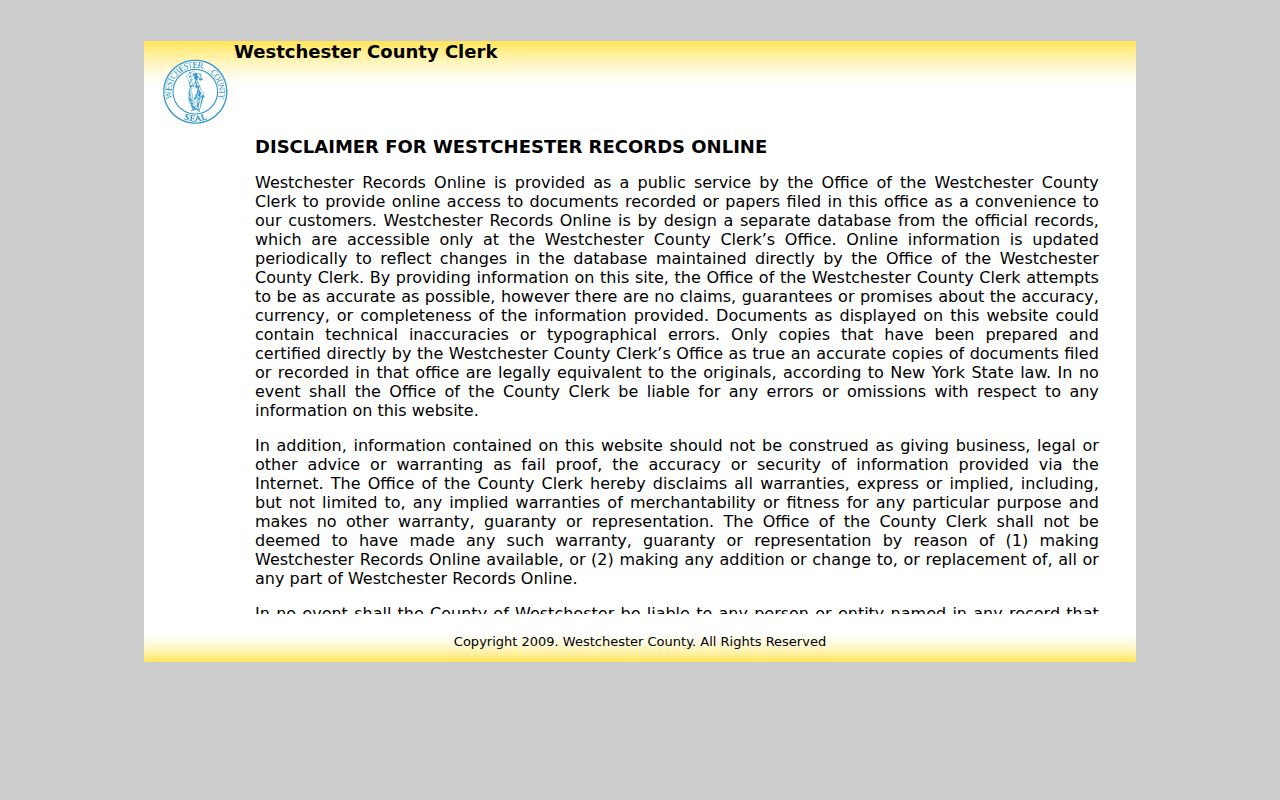
The County Clerk's Westchester Records Online system is the county's authoritative index for land instruments and filed maps. Registration comes first. Once inside, you can search by party name. A known book and page works too. So does an instrument clue. The municipality's SBL and assessment-card deed reference work as cross-checks. They never substitute for the recorded document. Image viewing carries a $20 daily or $1,200 annual license. Certification is a separate County Clerk service at 110 Dr. Martin Luther King Jr. Boulevard in White Plains, reachable at (914) 995-3080. The online-copy disclaimer explains why a screen image is not a certified deed.
Reconstruct the chain one grantor at a time
Start with the newest deed. Copy the grantee, grantor, recording date, instrument type, legal description, and every prior reference it recites. Then search that grantor as an earlier grantee. Repeat the same steps through the Westchester chain. A surname match alone proves nothing. Compare lot, block, map, and municipality at every link. The county holds plenty of similarly named people and parcels. Transfers into trusts, estates, and corporate entities can break a simple surname chain, and boundary-adjustment instruments do the same. Read the actual instrument and its exhibits. An assessment owner field may lag behind a recording. Compare the roll date with the deed date before calling it a conflict.
Use filed maps and Archives maps as deed clues
WRO filed maps preserve the legal subdivision detail that old deed descriptions depend on. County GIS adds present-day orientation. The County Archives map collection helps translate old estate, ward, railroad, and industrial descriptions into modern search terms.
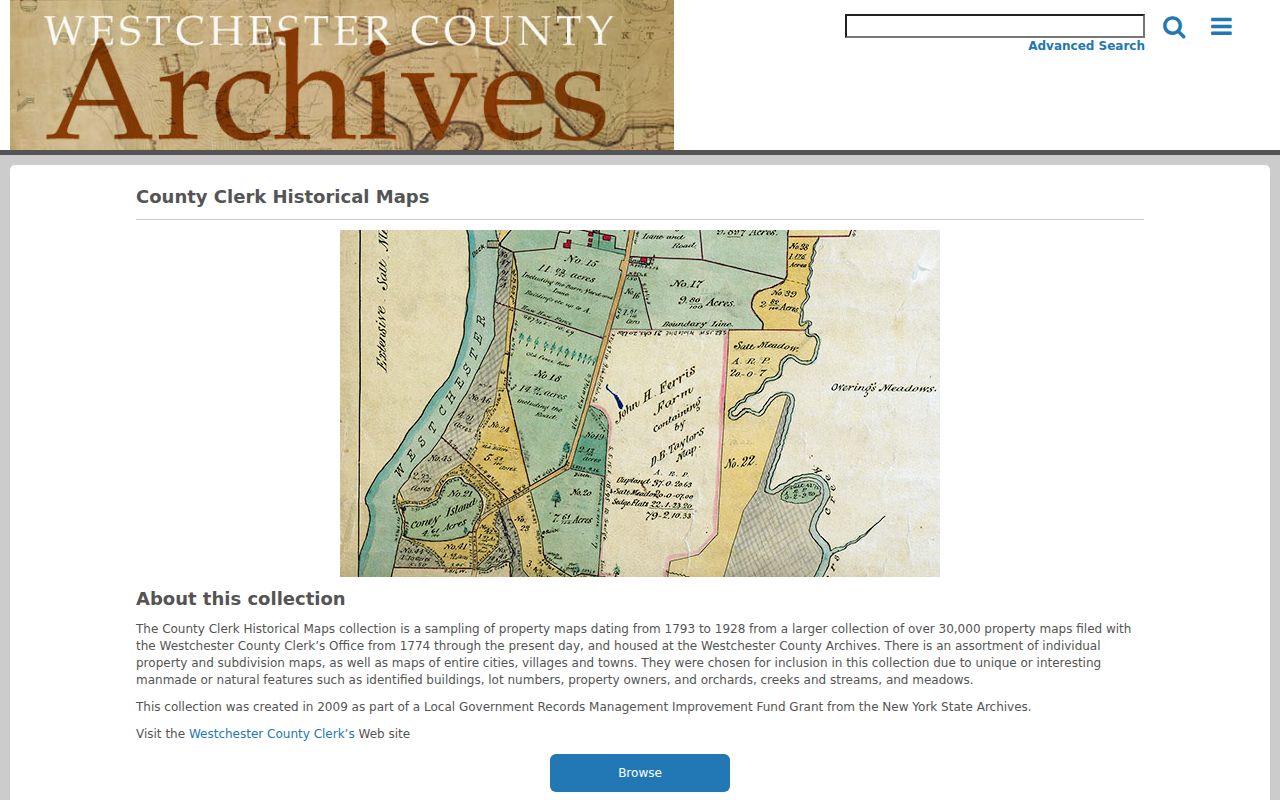
Yonkers deeds may use Getty Square, Saw Mill, Nepperhan, ward, village, or railroad language that seems foreign to a modern parcel search. New Rochelle waterfront records cite numbered tax lots and overlays. Mount Vernon reflects its subdivisions, mergers, and address changes in semiannual tax-map updates. Keep every historic label.
What a Westchester deed does not settle by itself
A deed records an instrument the clerk accepted for filing. It does not certify that title is clean. It does not confirm that a structure was permitted, or that a line on a GIS map matches a surveyed boundary. Easements, mortgages, releases, filed maps, court matters, and later instruments can all change the picture.
So treat the online result as a starting point. A title professional can render a legal conclusion about ownership. A licensed surveyor settles a disputed line. The recorder's index simply preserves the record. Its job is accuracy, not judgment.
Audit each Westchester chain link
For every instrument, retain the indexed names, execution and recording dates, book/page or instrument number, municipality, consideration label if present, legal description, filed-map reference, and prior-instrument recital. Mark how the parcel match was established. A mailing address, a shared surname, or an assessment reference alone is not enough. Then hunt for what the ownership-only sequence omits. Mortgages, releases, easements, corrective instruments, and maps all belong in the audit. A conveyance into a trust or entity changes the indexed party without revealing private beneficial interests. An executor's deed may need estate context. A boundary-line agreement can matter without ever being a conventional sale. State the earliest deed actually inspected. Name every unresolved gap. Archives maps, dated rolls, and local histories are corroborating clues, not replacements for the recorded chain, and a public index search aimed at insurable title or a legal opinion should end with the gathered citations handed to a qualified title professional rather than stretched past what it can prove.
Preserve the evidence behind every deed conclusion
Keep the WRO query, indexed spelling, instrument or book/page, recording date, municipality, legal-description match, and access date. Note the evidence type too. Was it an index entry, a licensed image, or a certified copy? Copy prior-instrument and filed-map references before moving backward, since those citations often resolve a changed address or parcel number. Cross-check the deed against the correct municipal roll. The roll is not title. A later deed may postdate taxable status, a split or merger may change the SBL, and a trust or entity may change the named party without disclosing private beneficiaries. Report what the instrument says. Leave unsupported personal inferences out. If an online search stalls, use the County Clerk records room, the certified-copy process, Archives maps, and dated assessment rolls as documented channels. State the earliest source inspected and every gap. A public index reconstruction is valuable evidence. A formal title search remains a different professional product.